
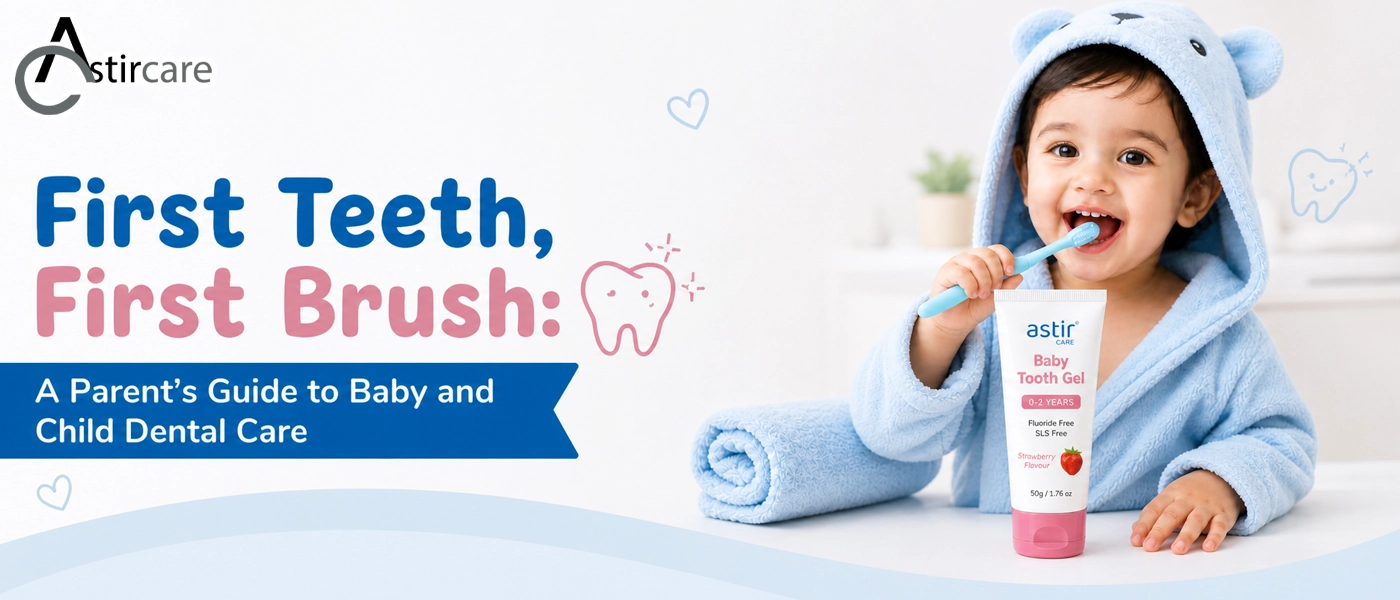
Establishing a robust oral hygiene routine for a child influences the development of permanent teeth and the alignment of the jaw long before the first primary tooth emerges. Neglecting early dental health leads to issues such as tooth decay or speech delays that affect a child's confidence and physical growth. Parents must focus on gum hygiene, correct teething management, and age-appropriate fluoride use to secure long-term oral health. Astir Care provides a range of specialised dental tools and remedies designed for the unique sensitivity of an infant’s mouth. This guide outlines the essential steps for maintaining a healthy smile from birth through the toddler years.
Starting Oral Hygiene Before the First Tooth Appears
-
Dental care begins in the first few months by cleaning the infant's gums after every feed. Using a soft, damp cloth or a dedicated silicone finger brush removes bacteria and residual milk sugars that linger on the soft tissues.
-
A clean oral environment prevents the buildup of plaque-forming bacteria even before teeth are visible. Establishing this habit early makes the child more comfortable with oral intervention as they grow older and start the brushing process.
-
Parents should schedule the first dental visit as soon as the first tooth breaks through the gum line. Early check-ups allow a dentist to monitor jaw development and provide professional advice on preventing early childhood caries.
-
The "first visit by the first birthday" rule helps a child become familiar with the clinical environment. Reducing anxiety around dental appointments at a young age leads to better cooperation during future check-ups and treatments.
-
Identifying potential issues like "tongue-tie" or unusual palate shapes early on prevents complications with feeding and speech. Professional oversight ensures that the child’s oral architecture develops according to healthy biological milestones.
Choosing the Right Tools for Tiny Mouths
-
Brushing must begin the moment the first primary tooth emerges from the gums. Use a tiny smear of fluoride toothpaste, no larger than a grain of rice, to protect the thin enamel of primary teeth from acid erosion.
-
Select a toothbrush with a very small head and ultra-soft bristles to prevent damage to the delicate gum tissue. Brands like NUK offer brushes specifically contoured for small mouths, ensuring every surface of the new tooth receives a thorough clean.
-
Fluoride remains a vital component in strengthening tooth enamel and making it more resistant to decay. Ensure the toothpaste contains at least 1,000ppm of fluoride, as lower concentrations prove less effective at preventing cavities in young children.
-
Manual dexterity develops slowly, so parents must choose a brush with an ergonomic handle. A chunky, easy-grip handle allows the child to practice holding the brush while the parent maintains control over the actual cleaning motion.
-
Encourage the child to spit out excess toothpaste rather than rinsing with water. Leaving a thin layer of fluoride on the teeth provides a continuous protective shield that works long after the brushing session ends.
Managing the Teething Phase and Gum Discomfort
-
Teething represents a significant developmental milestone that causes physical pain, gum swelling, and irritability. Providing safe, textured surfaces for the child to bite on helps alleviate the pressure of emerging teeth.
-
Ashton & Parsons Teething Gel offers a targeted solution for cooling and soothing inflamed gums. The gel creates a protective film over the sore area, allowing the infant to feed and sleep more comfortably during a flare-up.
-
Systemic restlessness and fussiness often accompany the arrival of new molars. Ashton & Parsons Teething Powders serve as a traditional remedy to calm the child’s overall discomfort and help them settle during difficult nights.
-
Avoid the use of amber teething necklaces or uncertified jewellery as these pose a significant strangulation and choking risk. Use only regulated teething toys or biscuits that meet UK safety standards for material durability.
-
High-quality teething biscuits, such as Bickiepegs, provide the necessary resistance for babies to bite down on. This mechanical action massages the gums and helps the primary teeth break through the surface more efficiently.
Preventing Early Childhood Tooth Decay
-
Avoid putting a baby to bed with a bottle of milk, formula, or fruit juice. Prolonged exposure to sugars throughout the night leads to rapid decay, often referred to as nursing bottle syndrome or "baby bottle tooth decay."
-
Transition the child from a bottle to a free-flow sippy cup by their first birthday. This change reduces the amount of time sugary liquids spend in contact with the front teeth, which are most vulnerable to erosion.
-
Water and plain milk remain the only recommended drinks for infants between scheduled mealtimes. Avoiding fizzy drinks and sweetened cordials is the most effective way to protect the integrity of the primary tooth enamel.
-
Limit sugary snacks to mealtimes rather than allowing the child to graze on sweets or dried fruits throughout the day. Frequent exposure to sugar keeps the mouth in an acidic state, which continuously demineralises the teeth.
-
Fresh fruits and crunchy vegetables act as natural tooth cleaners by stimulating the flow of saliva. Saliva is the mouth's primary defence mechanism, as it neutralises harmful acids and washes away food particles from the gum line.
Establishing a Consistent Brushing Routine
-
Supervise brushing until the child reaches at least seven or eight years of age. Young children lack the fine motor skills required to clean the back molars and the inner surfaces of the teeth effectively without help.
-
Make brushing a non-negotiable part of both the morning and evening routine to build a lifelong habit. Consistency ensures the child understands that oral hygiene is a standard part of daily health maintenance.
-
Use a timer or a two-minute song to ensure every quadrant of the mouth receives adequate attention. This duration is necessary to remove the bacterial film that accumulates along the gums and between the teeth.
-
Introduce a mild mint flavour early on to prevent the child from becoming dependent on overly sweet, fruit-flavoured toothpastes. This makes the eventual transition to adult-strength toothpaste much easier in later years.
-
Replace the toothbrush every three months or immediately following a bout of illness. A worn-out brush with frayed bristles is less effective at removing plaque and can harbour bacteria if not stored correctly.
The Role of Nutrition in Oral Health
-
A diet rich in calcium and phosphorus supports the remineralisation of teeth. Foods like cheese, plain yoghurt, and leafy greens provide the building blocks necessary for strong enamel and healthy bone growth in the jaw.
-
Vitamin D is essential for the body to absorb calcium effectively. Ensuring the child receives adequate Vitamin D through sunlight or supplements supports the overall strength of the dental structure and the immune system.
-
Harder foods like apples and carrots provide a mechanical cleaning action as the child chews. These foods help scrub the teeth naturally and encourage the development of strong chewing muscles.
-
Be wary of "hidden sugars" in processed baby foods and savoury snacks. Many pre-packaged items contain high levels of sugar that can contribute to decay if the teeth are not cleaned properly after consumption.
-
Encouraging a "rest period" for the mouth between meals allows the saliva to neutralise acids. Continuous snacking prevents the pH level in the mouth from returning to a neutral state, increasing the risk of cavities.
Identifying and Managing Common Dental Issues
-
Watch for white spots or brownish stains on the child's teeth, as these are often the first signs of early decay. If noticed, seek professional dental advice immediately to prevent the cavity from reaching the nerve.
-
Thumb sucking or the prolonged use of a dummy can impact the alignment of the teeth and the shape of the palate. Most experts suggest phasing out these habits by age three to allow the jaw to correct itself naturally.
-
Bleeding gums during brushing can indicate a buildup of plaque along the gum line. While it may seem counterintuitive, continuing to brush the area gently with a soft brush is necessary to clear the irritation.
-
Mouth ulcers or small sores can occur due to accidental biting or viral infections. Keeping the area clean and using a paediatric oral gel helps reduce the stinging and allows the tissue to heal within a few days.
-
Any trauma to the mouth, such as a fall that chips a primary tooth, requires an immediate dental assessment. Even if the tooth is a "baby tooth," damage can affect the permanent tooth developing underneath the gum.
Leading by Example in the Household
-
Children often mimic the behaviour of their parents, making it important for caregivers to demonstrate their own brushing routine. Showing the child that oral care is a positive, daily activity encourages them to take pride in their own smile.
-
Turn brushing into a family activity where everyone cleans their teeth at the same time. This social interaction makes the process more engaging and less like a chore for a reluctant toddler.
-
Use positive reinforcement, such as a sticker chart or praise, to reward a thorough brushing session. Celebrating small successes builds a positive association with dental visits and daily hygiene habits.
-
Talk about the dentist in a positive and calm manner to prevent the development of dental phobia. Explaining that the dentist is a "tooth doctor" who helps keep their smile bright sets a supportive tone for appointments.
-
Providing the child with a choice between two different coloured toothbrushes gives them a sense of autonomy. This small involvement in the process increases their willingness to participate in the morning and evening routine.
Shop Baby and Child Dental Care
Prioritising oral hygiene from a young age protects your child's developing smile and prevents the discomfort of early dental issues. From soothing teething gels to specialised infant toothbrushes and fluoride pastes, having the right tools makes maintaining a consistent routine significantly easier. Astir Care stocks a range of baby and child products tailored specifically to the needs of infants and children. By integrating these products into your child's daily regimen, you support healthy jaw development and the growth of strong, resilient primary teeth. Browse our selection of dental and teething essentials to ensure your child receives the best possible start in oral health. Shop our full collection today and experience quality care delivered to your door.