
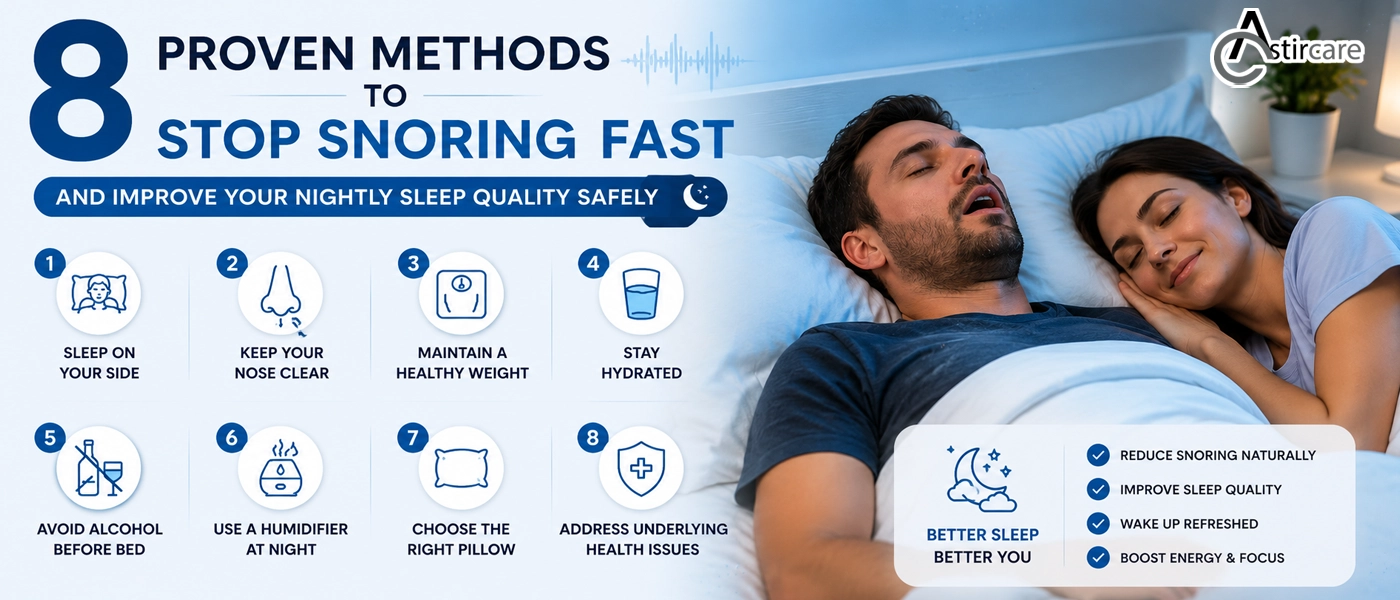
Disrupted sleep leaves you facing chronic daytime fatigue, morning headaches, and strained relationships. Snoring occurs when the muscles in the throat and soft palate relax, narrowing the airway and causing the surrounding tissues to vibrate during respiration. Resolving this nighttime disruption requires direct intervention to keep the airway clear and stable throughout the night. This structured outline details eight practical, safe methods to stop snoring fast and restore deep, restorative rest to your household.
1. Shift Sleep Positions to Keep the Airway Clear
-
Avoid sleeping flat on your back: Gravity pulls the tongue and soft palate downward against the back of the throat when resting face-up. This compression restricts the airway passage and intensifies tissue vibrations.
-
Adopt a consistent side-sleeping routine: Reorienting the body to the side allows air to flow freely through the throat without muscular obstruction.
-
Utilise positional pillows: Specialised structural pillows or body wedges keep the torso aligned on the side, preventing accidental rollover during deep sleep cycles.
2. Deploy Mechanical Nasal Strips to Expand Airway Passages
-
Widen the nostrils instantly: Flexible bands applied externally across the bridge of the nose mechanically peel the nasal passages open.
-
Reduce inhalation resistance: Expanding the nasal entry point lowers the velocity of incoming air, preventing the pressure drop that triggers throat vibrations.
-
Support drug-free relief: Mechanical strips offer an immediate solution for individuals seeking to avoid oral medications or medicated sprays.
3. Apply Lubricating Throat Sprays to Calm Tissue Vibrations
-
Target the soft palate directly: Specialised throat sprays coat the loose tissues at the back of the mouth with oil-rich micro-emulsions.
-
Minimise friction and noise: Keeping the throat membranes lubricated diminishes the friction that generates loud sounds during deep breathing.
-
Extend protection throughout the night: Time-release formulations remain active on the mucosal lining across multiple sleep stages, ensuring prolonged quietness.
4. Clear Nasal Congestion with Targeted Rinses and Sprays
-
Eliminate mucus blockages: Chronic allergies or sinus irritation force mouth breathing, which alters throat pressure and causes snoring. Saline nasal rinses flush out allergens and reduce local swelling.
-
Restore nasal breathing pathways: Utilising mild decongestant or steroid nasal sprays eases tissue inflammation inside the sinus cavity, allowing quiet, closed-mouth respiration.
-
Maintain optimal room humidity: Running a cool-mist humidifier in the bedroom prevents dry air from irritating the nasal lining and causing congestion.
5. Utilise Mandibular Advancement Devices for Structural Alignment
-
Reposition the lower jaw forward: Custom-fitted dental mouthpieces hold the jaw and tongue slightly forward during sleep.
-
Increase throat space physically: Advancing the mandible expands the airway diameter at the base of the tongue, preventing the tongue from collapsing backwards.
-
Protect teeth from grinding: Dual-action nightguards stabilise the bite, managing bruxism while simultaneously optimising airflow.
6. Adjust Evening Consumption Habits to Stabilise Muscles
-
Eliminate alcohol intake before bed: Alcohol acts as a potent muscle relaxant that targets the upper airway structures, causing profound collapse of the throat tissue.
-
Avoid heavy, late-night meals: Large dinners push the diaphragm upward against the lungs, restricting standard breathing volumes and complicating nighttime airflow.
-
Limit evening sedative use: Discuss alternative options with a pharmacist if prescription sleep aids aggravate throat relaxation and increase snoring intensity.
7. Implement Myofunctional Throat Exercises to Build Muscle Tone
-
Strengthen the soft palate and tongue: Performing specific oral coordination exercises tones the flaccid muscles responsible for airway restriction.
-
Practice targeted tongue slides: Moving the tongue backwards along the roof of the mouth reinforces the internal muscular wall, preventing tissue sagging over time.
-
Commit to daily repetition: Consistent physical conditioning of the upper respiratory muscles reduces the frequency and volume of chronic snoring naturally.
8. Monitor Vital Metrics and Establish Regular Sleep Patterns
-
Keep a structured sleep schedule: Going to bed and waking up at identical times prevents the extreme overtiredness that induces deeper, snore-prone muscle relaxation.
-
Track lifestyle changes: Reducing excess body weight around the neck diminishes the physical pressure exerted on the internal breathing passage.
-
Identify indicators of obstructive sleep apnoea: Consult a healthcare professional immediately if snoring features sudden gasping, choking sounds, or long pauses in respiration.
Shop Sleep & Snoring Products
Reclaiming a quiet night requires the correct targeted solutions. The Astircare digital platform stocks a variety of personal care options designed to support respiratory comfort and improve sleep quality. Browse the complete collection of Sleep and Snoring products to find trusted nasal strips, lubricating sprays, and oral devices tailored to your specific needs. Secure your essential supplies today to enjoy affordable home delivery across the UK and restore peace to your bedroom.