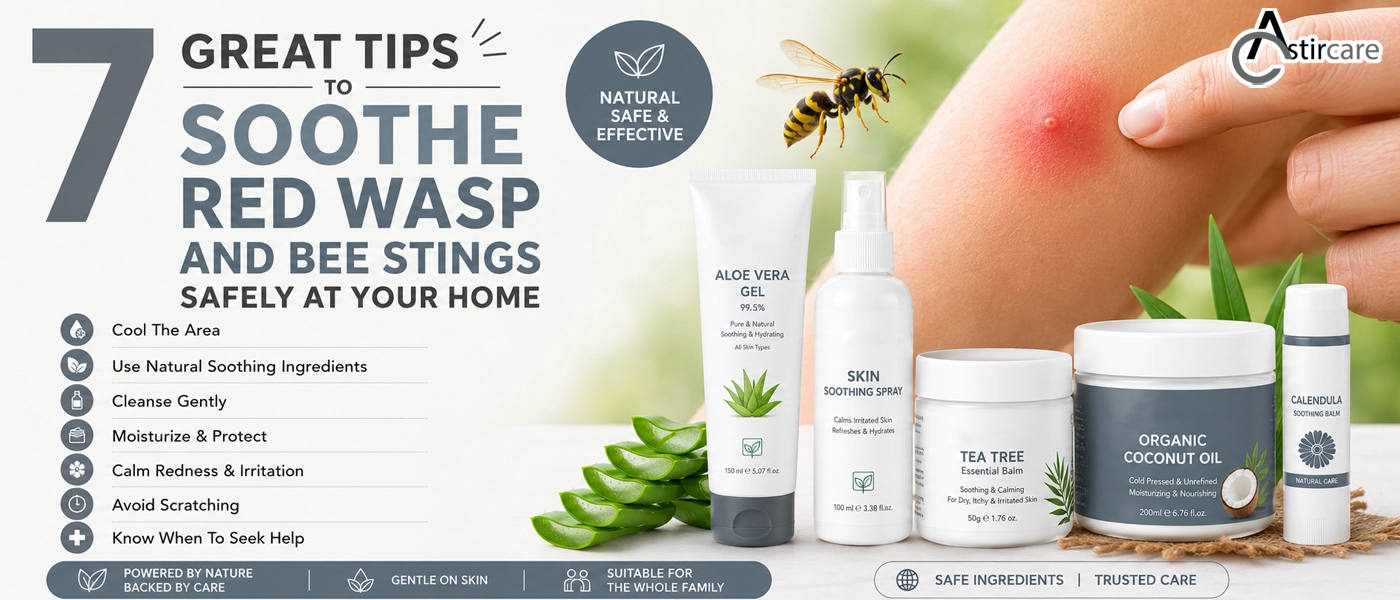
A sudden wasp or bee sting turns a quiet afternoon in the garden into a painful emergency. The sharp pinch and immediate burning sensation demand quick action before localised swelling takes over. Treating the skin correctly right away stops pain at the source and prevents prolonged irritation. Applying the right home treatment determines how fast the puncture wound heals. Here are seven great tips to soothe red wasp and bee stings safely at home. Learning to manage insect venom, reduce inflammation, and ensure long-term comfort helps ensure a safe, fast-healing process without unnecessary complications.
1. Remove the Stinger Immediately (Bees Only)
-
Locating the exact sting site immediately after the insect flies away stops further venom injection into the tissue.
-
A honeybee leaves a barbed stinger behind, attached to a venom sac continuing to pump toxins into the skin for up to a minute.
-
Scraping the stinger away using the firm, flat edge of a bank card or a fingernail proves the safest and most effective extraction method.
-
Placing the card flush against the skin and pushing it sideways across the bump catches the stinger base perfectly.
-
This specific sideways motion pulls the stinger out safely without applying downward pressure on the fragile venom sac.
-
Avoiding tweezers remains crucial; pinching the stinger acts like a syringe, injecting the remaining venom directly into the bloodstream.
-
Red wasps feature smooth stingers, allowing them to strike multiple times, requiring immediate distance from the nesting area.
-
Prompt removal stops the toxin flow and builds the necessary foundation for a quick, uncomplicated recovery.
-
Checking the skin visually under a bright light confirms the complete removal of the foreign object.
-
Removing the venom source early stops the immune system from launching a massive inflammatory response.
2. Clean the Affected Area Thoroughly
-
Washing the puncture wound with plain soap and cold water immediately after removing the stinger is an essential hygiene step.
-
Insects leave environmental bacteria and venom residue on the skin surface upon contact.
-
Plain soap breaks down dirt and lipid barriers, while cold water washes away loose contaminants effectively.
-
Lathering the soap gently around the red bump without scrubbing protects the surrounding sensitive tissue from micro-tears.
-
Scrubbing the injury increases local blood flow, inadvertently spreading venom further into the arm or leg.
-
Thorough cleaning prevents secondary bacterial infections, such as cellulitis, from taking hold inside the open wound.
-
Patting the area dry using a clean paper towel avoids transferring household germs from used bathroom hand towels.
-
A clean skin surface absorbs topical after-care treatments much more efficiently, speeding up the overall healing process.
-
Inspecting the area daily ensures the skin remains clean, dry, and free from excess discharge or unusual redness.
-
Maintaining strict hygiene over the next few days ensures the puncture wound closes properly and heals seamlessly.
3. Apply a Cold Compress to Stop Swelling
-
The human body sends excess blood to the injury site as a defence mechanism, causing rapid swelling and throbbing pain.
-
Applying a cold compress to the skin constricts local blood vessels, limiting this vasodilation response.
-
Wrapping several ice cubes inside a clean cotton cloth creates a safe, effective temperature barrier.
-
Placing bare ice directly on the skin poses a danger, as extreme cold causes surface tissue damage and frostbite.
-
Holding the wrapped ice pack against the bump for exactly fifteen minutes numbs the nerve endings temporarily.
-
Removing the ice pack for ten minutes allows normal blood circulation to return to the epidermal layers.
-
Repeating this specific cooling cycle several times during the first two hours suppresses the localised inflammation effectively.
-
Consistent cooling stops the bump from expanding and provides immediate, natural pain relief without relying on oral medication.
-
Keeping a dedicated gel ice pack ready in the freezer ensures quick treatment for unexpected garden injuries.
-
Applying cold immediately restricts the venom to the local area, preventing the toxins from spreading further through the tissue.
4. Elevate the Stung Area
-
Gravity naturally pulls fluids downward, causing excessive swelling when stings occur on the arms or legs.
-
Elevating the affected limb above heart level counteracts this fluid buildup by reducing hydrostatic pressure in the veins.
-
Resting the injured leg or arm on two firm pillows while lying flat on a sofa works best.
-
This simple elevation technique uses gravity to draw inflammatory fluids away from the puncture wound back toward the core.
-
Reducing fluid buildup minimises skin tightness, stiffness, and the intense throbbing sensation around the bite mark.
-
Removing tight clothing, rings, and bracelets from the stung limb immediately prevents dangerous circulation issues later.
-
Unchecked swelling easily cuts off blood circulation entirely if rings remain stuck on expanding fingers.
-
Maintaining this elevated position for thirty solid minutes stabilises the vascular response and initiates the healing phase.
-
Proper elevation accelerates the natural dispersal of the venom proteins through the lymphatic system.
-
Resting the limb prevents active muscle contractions from pushing the venom deeper into the bloodstream.
5. Neutralise the Venom with Targeted Relief
-
Insect venom contains specific proteins and enzymes triggering allergic skin responses and intense, prolonged itching.
-
Breaking down these proteins chemically stops the pain directly at its source rather than just masking the symptoms.
-
The After Bite Classic Handy Pen, available at Astircare, treats these stings effectively and quickly at home.
-
This specialised product uses a precise 3.5% ammonia formula to combat the acidic nature of insect toxins.
-
Rubbing the applicator tip directly over the clean puncture wound delivers the liquid accurately without mess.
-
The ammonia interacts directly with the venom proteins, neutralising the harmful compounds instantly upon contact.
-
This targeted chemical neutralisation shrinks the red bump visibly and stops the persistent itching cycle.
-
Applying a dedicated bite relief treatment works much faster and more reliably than standard, unproven home remedies.
-
Reapplying the ammonia solution proves beneficial if the itching sensation returns after a few hours of activity.
-
Treating the chemical source of the pain allows a faster return to daily routines and outdoor hobbies.
6. Resist the Urge to Scratch
-
The immune system releases histamines from mast cells to fight the venom, creating an intense, localised urge to scratch.
-
Resisting this urge entirely protects the fragile, healing skin tissue from unnecessary mechanical damage.
-
Scratching applies downward pressure to the site, pushing remaining venom deeper into the lower skin layers.
-
Human fingernails carry thousands of microscopic bacteria and fungi underneath the tips.
-
Dragging nails across the bump breaks the protective skin surface, introducing these bacteria directly into the open wound.
-
This physical contamination easily turns a minor sting into a severe skin infection requiring prescription antibiotics.
-
Applying a targeted treatment suppresses the histamines chemically and quiets the agitated nerve endings naturally.
-
Keeping fingernails trimmed short reduces the risk of accidental skin damage during sleep when scratching happens unconsciously.
-
Leaving the skin completely undisturbed allows the natural scab to form, completing the healing process safely.
-
Applying a clean, breathable bandage over the bump creates a physical barrier against mindless, habitual scratching.
7. Monitor for Severe Allergic Reactions
-
Most minor insect stings resolve completely within a few days using standard, conservative home care methods.
-
A small percentage of people experience anaphylaxis, a rapid, life-threatening allergic reaction requiring professional intervention.
-
Monitoring the person closely for thirty minutes following the initial insect strike remains a vital safety protocol.
-
Watching for excessive swelling spreading rapidly beyond the sting site to the face, lips, or neck is necessary.
-
Listening for wheezing, hoarseness, or sudden difficulty drawing breath indicates a severe respiratory issue.
-
Checking for signs of dizziness, mental confusion, nausea, or a rapid drop in blood pressure requires immediate action.
-
Treating these systemic symptoms as an absolute medical emergency requires calling an ambulance immediately.
-
Home remedies and topical treatments never replace professional medical intervention during an active anaphylactic shock event.
-
Administering a prescribed epinephrine auto-injector right away is essential if the person carries one for known insect allergies.
-
Understanding these critical warning signs protects family members during summer outdoor activities and gardening sessions.
Browse Through Our Bite & Sting Relief Products
Stop letting insect stings disrupt your outdoor afternoons. Keeping the right treatments nearby helps you manage sudden pain and swelling safely. At Astircare, we supply targeted solutions to neutralise venom and protect your skin. Keeping dedicated treatments in your home first aid kit ensures you stay ready for unexpected garden emergencies. Take a moment to browse through our Bite & Sting Relief products to discover practical options for calming irritation quickly. Explore the complete range and keep your household prepared for the summer season.